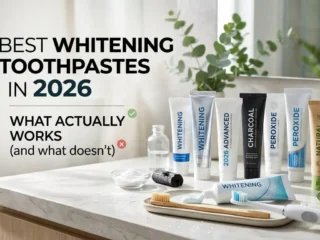

The short answer: the best whitening toothpaste for most people is one that contains fluoride, a low-level peroxide or a gentle silica abrasive, and ideally carries the ADA Seal of Acceptance. For stained but healthy teeth, a peroxide formula like Colgate Optic White Advanced is a strong starting point. For sensitive teeth, go with Sensodyne Pronamel Gentle Whitening instead.
Here’s the part most guides skip: whitening toothpaste will not turn your teeth three shades lighter in a week. It removes surface stains, such as coffee, tea, red wine, and the film that builds up from everyday eating. Used correctly, it can make a visible difference, and it’s the cheapest way to keep your smile bright. This guide shows you how to pick one that does what it claims.
Our Top Whitening Toothpaste Picks at a Glance
| Best for | Pick | Key whitening method |
|---|---|---|
| Best overall | Colgate Optic White Advanced | Hydrogen peroxide + fluoride |
| Best for sensitive teeth | Sensodyne Pronamel Gentle Whitening | Gentle polishing + enamel support |
| Best all-in-one protection | Crest Pro-Health Whitening / Colgate Total Whitening | Silica abrasives + gum and cavity care |
| Best budget baking soda | Arm & Hammer Advance White | Baking soda + peroxide |
| Best natural-style option | Tom’s of Maine Simply White | Natural silica, no peroxide |
| Best enamel-friendly alternative | Nano-hydroxyapatite pastes (e.g. Davids) | Mineral polishing |
| Best premium system | Supersmile Professional Whitening | Calcium peroxide system |
Product formulas change often. Always check the label for the current peroxide percentage, fluoride content, and ADA Seal before you buy.
How Whitening Toothpaste Really Works
There are only two ways a toothpaste can make teeth look whiter.
1. Physical stain removal. Mild abrasives like hydrated silica, calcium carbonate, and baking soda gently polish away surface stains. According to the ADA, whitening toothpastes mainly rely on abrasives to remove surface stains, and some add low levels of peroxide to help lighten tooth color.
2. Chemical whitening. Some formulas contain hydrogen peroxide or a related bleaching agent. Because toothpaste is only on your teeth for two minutes, the concentration has to be low, so the effect is modest compared with strips, trays, or in-office treatment.
There’s also a third trick you’ll see in marketing: optical brighteners like blue covarine or purple pigments. They don’t remove anything. They change how light reflects off your teeth, so they look whiter for a short time.
Why Toothpaste Can’t Fix Every Stain
Stains come in two types, and this is the single most useful thing to understand before you spend money.
- Extrinsic stains sit on the outside of the enamel. Coffee, tea, red wine, berries, tobacco, and dark sodas cause them. Whitening toothpaste can help here.
- Intrinsic stains are inside the tooth. Aging, trauma, too much fluoride during childhood, and certain medications such as tetracycline cause them. The ADA says whitening toothpaste won’t significantly change intrinsic tooth color. These need peroxide bleaching from a dentist or a peroxide strip or tray product.
If your teeth look yellow because the enamel is thinning and the naturally yellow dentin underneath is showing through, a more abrasive toothpaste can make that worse, not better.
The Ingredients That Matter (and What They Do)
- Fluoride. Non-negotiable. It protects enamel and prevents cavities. Never swap it out for whiter teeth.
- Hydrogen peroxide or carbamide peroxide. The only common at-home ingredient that lightens color beyond surface stains. Concentrations vary by product, so read the label.
- Hydrated silica. A gentle abrasive that polishes stains away and is widely used in ADA-accepted pastes.
- Baking soda (sodium bicarbonate). A mild abrasive that many people like for its clean feel.
- Potassium nitrate or stannous fluoride. These calm tooth sensitivity, which is useful if whitening products make your teeth zing.
- Nano-hydroxyapatite. A mineral that’s chemically similar to enamel. It’s popular in newer pastes for sensitivity and gentle polishing. Many are fluoride-free, so ask your dentist whether that suits you.
7 Best Whitening Toothpastes: Reviewed
1. Colgate Optic White Advanced: Best Overall
A peroxide-based whitening paste with fluoride. In 2019, Colgate Optic White Advanced Sparkling White became the first at-home bleaching-category toothpaste to earn the ADA Seal of Acceptance, which is a big trust signal in this category.
Good for: people who want more than surface polishing, especially coffee and tea drinkers. Watch out for: temporary sensitivity. Peroxide percentages differ across the Optic White line, so check the tube.
2. Sensodyne Pronamel Gentle Whitening: Best for Sensitive Teeth
If whitening products make your teeth wince, start here. Sensodyne’s whitening pastes are built for people with sensitivity, and the Pronamel line is designed to help protect enamel from acid wear from things like soda, wine, and citrus.
Good for: sensitive teeth, enamel wear, and people who drink a lot of acidic beverages. Watch out for: results are gentler and slower than a peroxide formula.
3. Crest Pro-Health Whitening or Colgate Total Whitening: Best All-in-One
These are the “do it all” pastes. Both target surface stains while also addressing plaque, gum health, and cavities. If you don’t want a separate whitening paste and a regular paste, one of these can simplify your routine. Both brands’ multi-benefit pastes frequently appear on ADA-accepted lists, but confirm the seal on the specific tube.
Good for: families and anyone who wants one paste for everything. Watch out for: whitening is mild, so it’s more about maintenance than dramatic change.
4. Arm & Hammer Advance White: Best Budget Pick
Baking soda polishes away surface stains, and the formula includes peroxide for extra brightening. It’s usually one of the more affordable options.
Good for: budget-conscious shoppers who like the clean, scrubbed feeling. Watch out for: some people dislike the taste and texture.
5. Tom’s of Maine Simply White: Best Natural-Style Option
A peroxide-free whitening paste that uses naturally derived silica to lift surface stains. Expect gentler, slower results.
Good for: people who prefer simpler ingredient lists. Watch out for: without peroxide, it only addresses surface stains.
6. Nano-Hydroxyapatite Pastes (e.g. Davids): Best Enamel-Friendly Alternative
These use microscopic mineral particles that resemble the mineral in your enamel. They polish gently and are popular among people with sensitivity. They aren’t a bleaching option, so don’t expect major color change.
Good for: sensitive teeth and anyone wanting a gentler, mineral-based option. Watch out for: many are fluoride-free. Talk to your dentist if you’re prone to cavities.
7. Supersmile Professional Whitening: Best Premium System
Supersmile is a higher-priced, dentist-marketed option that uses a calcium peroxide system and is low in abrasivity, according to the brand. It advertises an RDA of 65, well below the ADA’s limit. The brand also claims up to six shades of whitening in five days, but that’s a manufacturer claim, so treat it as a best-case result rather than a guarantee.
Good for: people willing to pay more for a gentler, systems-based approach. Watch out for: the price, and note that it’s formulated without silica and with an unusual brushing method (applied to a dry brush).
What to Avoid
Charcoal toothpaste. It’s trendy, but no charcoal toothpaste carries the ADA Seal of Acceptance, and a review in the Journal of the American Dental Association found not enough evidence to support the whitening claims. Charcoal can also be abrasive.
Very gritty pastes with no published abrasivity. More scrubbing doesn’t equal whiter teeth, and wearing down enamel exposes yellow dentin.
Homemade fixes. Baking soda and lemon, strawberries, and apple cider vinegar are acidic or abrasive in ways that can harm enamel. Skip them.
A Quick Word on Abrasiveness (RDA)
Toothpaste abrasivity is measured with the Relative Dentin Abrasivity (RDA) scale. Products with the ADA Seal must score 250 or lower, and many dentists suggest keeping daily-use pastes well below that. Most major brands don’t print their RDA on the box, so choosing an ADA-accepted product is the easiest safeguard. If you’re curious about the number, check the manufacturer’s website.
How to Get the Best Results From Whitening Toothpaste
- Brush twice a day for two full minutes. Most of the benefit comes from consistency.
- Use a soft-bristled brush. Hard bristles plus an abrasive paste is a recipe for enamel wear. An electric toothbrush with a built-in timer and pressure sensor takes the guesswork out of technique.
- Use a pea-sized amount. More paste doesn’t whiten faster.
- Don’t rinse right away. Spit, but skip the water so fluoride lingers on your teeth for a while.
- Be careful after acidic drinks. Many dentists suggest waiting about 30 minutes after soda, wine, or citrus before brushing, since enamel is temporarily softer.
- Cut down on stain triggers. Drink coffee and tea through a straw, rinse with water afterward, and limit dark sodas.
- Get regular cleanings. Built-up tartar traps stains that toothpaste can’t touch. A professional cleaning first makes any whitening paste work better.
How Long Does Whitening Toothpaste Take to Work?
Most people notice a subtle change in about 2 to 6 weeks of twice-daily use. Expect results to be modest: usually around one shade lighter, less if your stains are deep-set. If you see nothing after six to eight weeks, the stain is probably intrinsic, and it’s time to talk to a dentist.
When Toothpaste Isn’t Enough
See a dentist if:
- The yellowing or gray tone hasn’t budged after consistent use.
- You have crowns, veneers, or bonding. Whitening products don’t change the color of restorations.
- Your teeth are suddenly sensitive or painful.
- You want a bigger change quickly. Peroxide strips, custom trays, or in-office whitening can lighten teeth several shades.
Your dentist can also tell you whether stains are surface-level or deeper, which saves you from buying products that won’t help.
Frequently Asked Questions
What is the best whitening toothpaste overall?
Colgate Optic White Advanced is a strong all-around choice for stain removal, and it earned the ADA Seal. If your teeth are sensitive, Sensodyne Pronamel Gentle Whitening is a better fit.
Does whitening toothpaste actually work?
Yes, on surface stains. It can make stained teeth look brighter, but it doesn’t change the natural color of your teeth or lighten stains inside the tooth.
Is whitening toothpaste safe to use every day?
For most adults, yes, if it contains fluoride and isn’t overly abrasive. If you notice sensitivity or irritated gums, alternate with a sensitive-teeth toothpaste or ask your dentist.
Can whitening toothpaste damage enamel?
It can if it’s very abrasive or you brush too hard. ADA-accepted pastes, a soft brush, and gentle technique keep the risk low.
Is purple toothpaste worth it?
Purple toothpaste works on color theory: purple offsets yellow tones, so teeth look whiter briefly. It doesn’t remove stains, and the effect wears off.
Is charcoal toothpaste good for whitening?
No. There’s no ADA-accepted charcoal toothpaste, and evidence for its whitening claims is weak.
Can I use whitening toothpaste on veneers or crowns?
You can, but it won’t whiten them. Ask your dentist which paste is gentlest on restorations.
Is whitening toothpaste safe for kids?
Most whitening pastes aren’t designed for young children. Use a fluoride toothpaste made for their age and ask your pediatric dentist before adding any whitening product.
The Bottom Line
Pick a whitening toothpaste with fluoride and, when possible, the ADA Seal. Choose a peroxide formula for stronger stain-fighting, a sensitivity formula if your teeth are easily irritated, and a gentle mineral paste if enamel health is your top concern. Pair it with a soft brush, good technique, and regular cleanings. If the shade doesn’t budge, it’s a sign you need a professional treatment, not a different tube.
This article is for general information and isn’t a substitute for professional dental advice. Product formulas and claims change, so check current labels, and talk to your dentist about your specific situation.