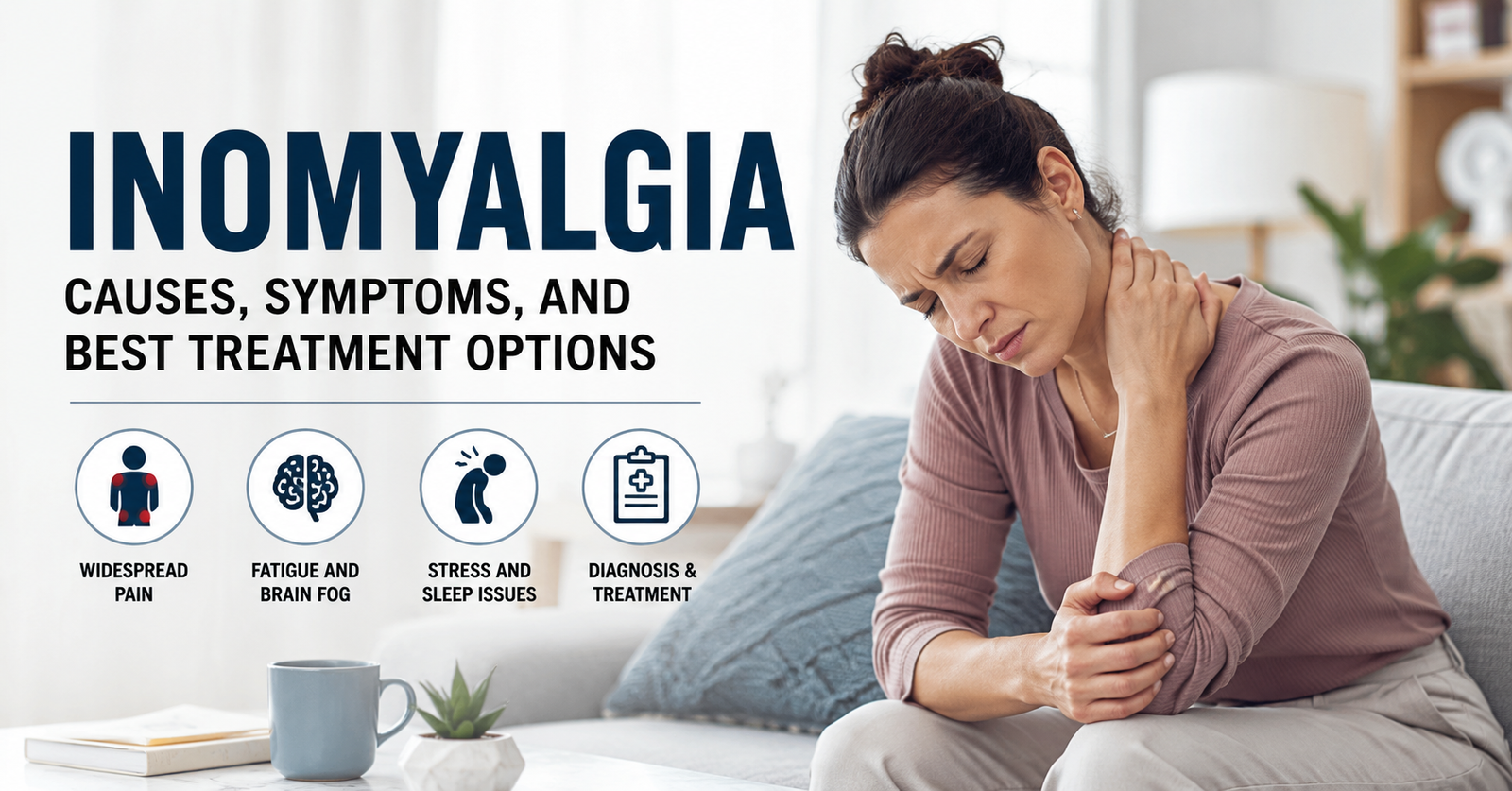

Living with constant muscle pain, tiredness, and body aches can make daily life difficult. Many people with inomyalgia struggle to understand why they feel exhausted even after rest or why simple tasks become painful. The good news is that proper diagnosis, lifestyle changes, medications, and stress management can help control symptoms and improve quality of life. Understanding the causes, symptoms, and treatment options is the first step toward relief.
What Is Inomyalgia?
Inomyalgia is commonly associated with chronic muscle pain and tenderness throughout the body. It is often linked with conditions like Fibromyalgia, where people experience widespread pain, fatigue, sleep problems, and mental fog.
The term generally refers to muscular pain conditions that affect daily activities, mood, and physical energy levels. In many cases, symptoms continue for months or years and may come and go in periods called flare-ups.
According to Mayo Clinic, fibromyalgia-related pain may happen because the brain and nervous system become more sensitive to pain signals.
Fibromyalgia Meaning and Connection With Inomyalgia
The word fibromyalgia comes from:
- Fibro = fibrous tissues
- Myo = muscles
- Algia = pain
This condition causes widespread musculoskeletal pain and affects how the body processes pain signals. Many people use inomyalgia to describe similar long-term muscle pain conditions.
Fibromyalgia is not simply “normal body pain.” It is a real medical condition that can impact sleep, focus, emotions, and physical health.
Fibromyalgia Symptoms
People with inomyalgia or fibromyalgia may experience symptoms differently. Some have mild discomfort, while others face severe pain that affects work and personal life.
Common Symptoms Include
- Widespread muscle pain
- Body tenderness
- Fatigue and weakness
- Morning stiffness
- Sleep problems
- Brain fog or poor concentration
- Headaches
- Anxiety and depression
- Tingling sensations
- Increased sensitivity to touch
Many patients describe the pain as a constant dull ache lasting more than three months.
Fibromyalgia Symptoms in Females
Women are diagnosed with fibromyalgia more often than men. Symptoms in females may include:
- Severe fatigue
- Hormonal sensitivity
- Pain during menstruation
- Frequent migraines
- Mood swings
- Sleep disturbances
Research suggests hormonal changes may increase pain sensitivity in women.
Fibromyalgia Pain Points
Fibromyalgia pain points are tender areas on the body that hurt when pressure is applied. Common pain points include:
- Neck
- Shoulders
- Upper back
- Hips
- Knees
- Elbows
Some people even feel pain from light touch, tight clothing, or temperature changes. Community experiences shared online also describe burning skin sensations and body tenderness during flare-ups.
Fibromyalgia Causes
Doctors still do not know the exact cause of fibromyalgia, but several factors may contribute to it.
1. Nervous System Sensitivity
The brain and spinal cord may become overly sensitive to pain signals.
2. Genetics
Fibromyalgia often runs in families, suggesting a genetic connection.
3. Physical Trauma
Injuries, surgeries, or accidents can trigger symptoms.
4. Emotional Stress
Long-term stress and anxiety may worsen pain sensitivity.
5. Infections
Some viral or bacterial infections may trigger symptoms in certain individuals.
6. Poor Sleep
Lack of quality sleep can increase body pain and fatigue.
Fibromyalgia Flare Up
A fibromyalgia flare-up is a period when symptoms suddenly become worse. Flare-ups may last for days or even weeks.
Common Triggers
- Stress
- Lack of sleep
- Cold weather
- Overworking the body
- Emotional trauma
- Poor diet
During flare-ups, people may experience stronger pain, exhaustion, headaches, and mental fog.
Fibromyalgia Diagnosis
Fibromyalgia diagnosis can be challenging because there is no single test that confirms the condition.
Doctors usually diagnose it by:
- Reviewing symptoms
- Checking pain history
- Performing physical exams
- Ruling out other diseases
Healthcare providers often look for widespread pain lasting more than three months in different body areas.
Fibromyalgia Test
There is no specific fibromyalgia test, but doctors may order tests to exclude other conditions.
Common Tests Include
- Blood tests
- Thyroid function tests
- Vitamin D tests
- Sleep studies
- Rheumatoid arthritis screening
These tests help doctors confirm that symptoms are not caused by another illness.
Fibromyalgia ICD 10 Code
The official ICD-10 code for fibromyalgia is:
M79.7 — Fibromyalgia
This code is used by healthcare providers and insurance systems for medical records and diagnosis purposes.
Best Fibromyalgia Treatment Options
Although there is no permanent cure, many treatments can help reduce symptoms and improve daily life.
1. Medications
Doctors may prescribe:
- Pain relievers
- Antidepressants
- Muscle relaxants
- Anti-seizure medications like pregabalin
These medicines may help reduce pain and improve sleep quality.
2. Exercise Therapy
Light exercise is one of the most effective treatments.
Helpful activities include:
- Walking
- Stretching
- Swimming
- Yoga
Regular movement helps improve flexibility and reduce stiffness.
3. Stress Management
Stress often worsens symptoms. Helpful techniques include:
- Meditation
- Deep breathing
- Counseling
- Relaxation exercises
4. Better Sleep Habits
Quality sleep is important for symptom control.
Tips for Better Sleep
- Sleep at the same time daily
- Avoid caffeine at night
- Reduce screen time before bed
- Keep the room quiet and dark
5. Healthy Diet
A balanced diet may help reduce inflammation and fatigue.
Foods That May Help
- Fruits
- Vegetables
- Lean protein
- Whole grains
- Omega-3 rich foods
6. Physical Therapy
Physical therapists teach exercises that improve posture, strength, and body movement. Water-based exercises are especially helpful for many patients.
Natural Remedies for Inomyalgia
Some people find relief with natural approaches such as:
- Warm baths
- Massage therapy
- Acupuncture
- Herbal teas
- Gentle stretching
Natural methods may not cure the condition but can support overall comfort and relaxation.
Living With Fibromyalgia
Living with fibromyalgia can feel physically and emotionally exhausting. Many patients struggle because symptoms are invisible to others. However, support from family, doctors, and healthy routines can make life more manageable.
Online communities also show that many people experience similar symptoms like fatigue, brain fog, and body tenderness.
Tracking symptoms, reducing stress, and following treatment plans can help patients regain control over their daily lives.
When to See a Doctor
You should speak with a healthcare professional if you experience:
- Long-term body pain
- Extreme fatigue
- Sleep problems
- Memory issues
- Pain affecting daily activities
Early diagnosis may help improve symptom management and quality of life.
FAQs
Is inomyalgia the same as fibromyalgia?
Inomyalgia is often used to describe muscle pain conditions similar to fibromyalgia, though fibromyalgia is the officially recognized medical diagnosis.
Can fibromyalgia be cured?
There is currently no permanent cure, but treatments can help control symptoms effectively.
What is the biggest symptom of fibromyalgia?
Widespread body pain combined with fatigue is considered the most common symptom.
Does stress make fibromyalgia worse?
Yes, emotional and physical stress can trigger flare-ups and worsen symptoms.
What foods should fibromyalgia patients avoid?
Some people avoid processed foods, excessive sugar, caffeine, and alcohol because they may worsen symptoms.
Is fibromyalgia dangerous?
Fibromyalgia is not usually life-threatening, but it can seriously affect quality of life if left unmanaged.
Conclusion
Inomyalgia and fibromyalgia are chronic pain conditions that affect millions of people worldwide. Symptoms such as widespread pain, fatigue, sleep disturbances, and mental fog can make everyday life challenging. While there is no complete cure, treatments including medication, exercise, stress management, physical therapy, and healthy lifestyle habits can significantly improve symptoms.
Understanding the condition early and working closely with healthcare professionals can help patients manage flare-ups, reduce discomfort, and maintain a better quality of life.