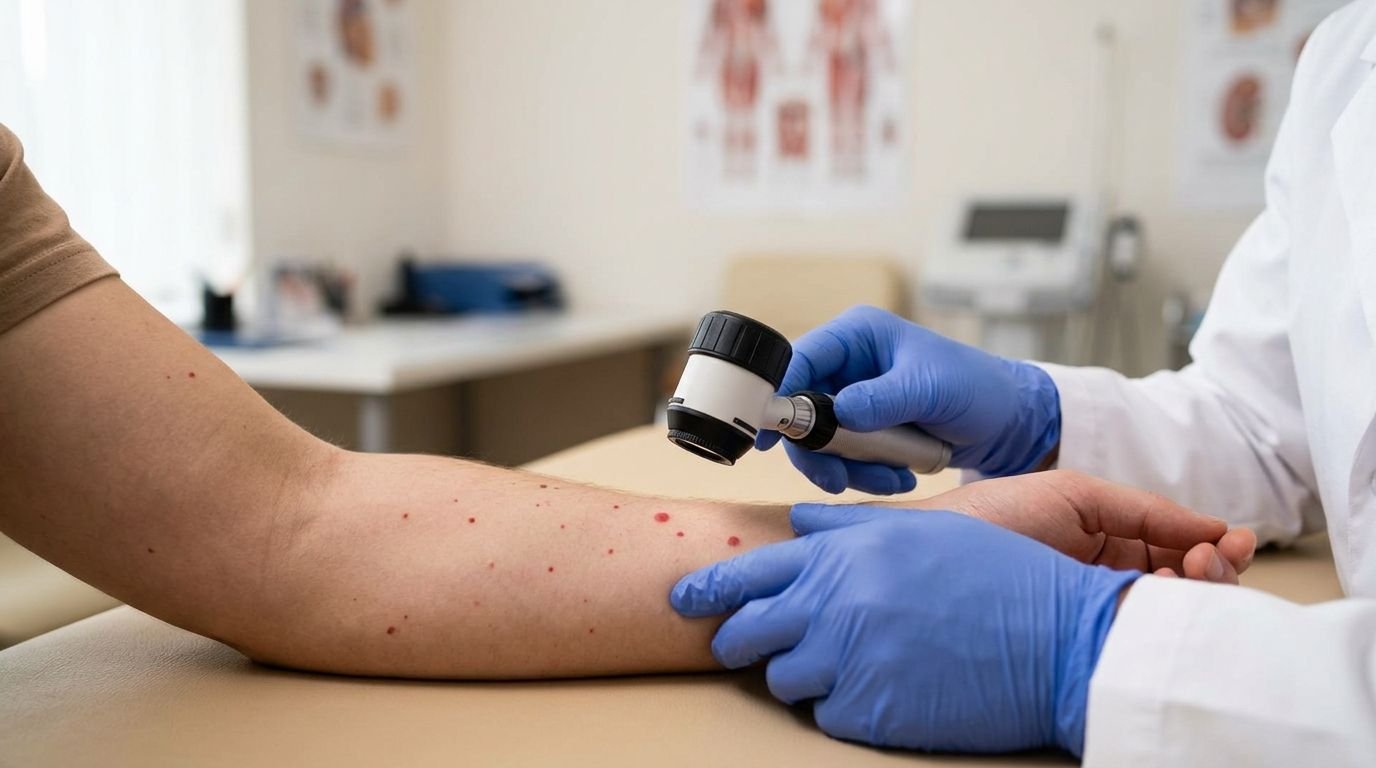

Noticing red dots on your skin can be unsettling, especially when they appear out of nowhere. The good news is that most tiny red dots are harmless: cherry angiomas, heat rash, keratosis pilaris, folliculitis, or a mild irritation. The less common but important cause is petechiae, pinpoint spots of bleeding under the skin that can signal an infection, a medication reaction, or a blood problem.
This guide shows you how to tell the difference at home, what each cause typically looks like, and the exact warning signs that mean you should not wait.
Quick Answer: What Are Those Red Dots?
- Fade when you press them, and itch or feel bumpy: usually a surface problem such as heat rash, folliculitis, an allergic reaction, or an insect bite.
- Bright red, round, painless, and slowly increasing with age: most likely cherry angiomas (harmless).
- Flat, pinpoint, and do not fade when pressed: possible petechiae. Get them checked, and get urgent care if you also have a fever or feel very unwell.
Try the Glass Test First (10 Seconds)
This is the single most useful thing you can do before reading further.
- Press the side of a clear drinking glass firmly against the dots.
- Look through the glass.
- If the dots fade or turn pale, they are “blanching,” which usually points to a surface skin issue.
- If the dots stay the same red, purple, or brown color, they are “non-blanching,” which points to bleeding under the skin (petechiae or purpura).
On darker skin, spots can look brown, purple, or just darker than the surrounding skin, so check in bright natural light and look at the palms, soles, inside of the mouth, and the whites of the eyes where color is easier to see. The glass test is a helpful clue, not a diagnosis. A non-blanching rash together with fever is an emergency.
Quick Comparison: Which Type of Red Dot Do You Have?
| Type | Looks like | Itchy? | Fades when pressed? | Usually serious? |
|---|---|---|---|---|
| Cherry angioma | Bright red, round, smooth, 1 to 5 mm | No | Mostly yes (may stay) | No |
| Petechiae | Flat pinpoint dots, red, purple, or brown | No | No | Can be, depends on cause |
| Heat rash | Tiny red bumps in sweaty or covered areas | Prickly or itchy | Yes | No |
| Keratosis pilaris | Rough, small bumps on upper arms and thighs | Sometimes | Yes | No |
| Folliculitis | Red bumps centered on hair follicles | Mild itch or tender | Yes | Rarely |
| Contact dermatitis | Red dots or patches, sometimes in a pattern | Yes | Yes | Rarely |
| Hives | Raised, itchy welts that come and go | Yes | Yes | If with breathing trouble, yes |
Common Harmless Causes of Red Dots on Skin
Cherry Angiomas
Cherry angiomas are small, bright red, dome-shaped spots made of tiny clusters of blood vessels near the surface. They commonly start appearing after age 30 and tend to multiply with age. They are benign and need no treatment. Dermatologists can remove them with laser, cryotherapy, or electrocautery if they bother you cosmetically, or if they bleed from friction. Removal is usually cosmetic and often not covered by insurance.
A quick tip: a cherry angioma that suddenly changes shape, becomes dark, bleeds without cause, or doesn’t look like your other spots is worth a dermatologist visit, because a few skin cancers can mimic red growths.
Heat Rash (Miliaria)
When sweat ducts get blocked, sweat gets trapped and small red or skin-colored bumps appear, often in skin folds, on the chest, back, or under tight clothing. It’s most common in hot, humid weather and in babies. Cooling the skin, wearing loose breathable fabrics, and avoiding heavy creams on the area usually clears it within days.
Keratosis Pilaris (“Chicken Skin”)
Keratosis pilaris causes rough, tiny bumps, often red or pink, on the outer upper arms, thighs, and sometimes the cheeks. It happens when keratin plugs hair follicles. It’s harmless and often runs in families. Gentle exfoliation with lactic acid or urea moisturizers, plus daily moisturizing, can smooth the texture, though it tends to come and go.
Folliculitis
Folliculitis is inflammation of hair follicles from bacteria, yeast, or irritation. Shaving, tight clothing, heavy sweating, and hot tubs are common triggers. Look for red dots with a hair at the center, sometimes with a small white tip. Mild cases usually settle in about one to two weeks with warm compresses and by avoiding shaving the area. Painful, spreading, or recurring bumps deserve a clinician’s look.
Contact Dermatitis and Allergic Reactions
A new laundry detergent, skincare product, plant, metal, or fabric can trigger itchy red dots or patches. Clues include a rash that follows the exact shape of what touched your skin and appears within hours to days. Stop using anything new, keep the skin moisturized, and consider a short course of 1% hydrocortisone for small areas. If your face, lips, or eyes swell, or you struggle to breathe, treat it as an emergency.
Eczema, Insect Bites, and Rosacea
- Eczema (atopic dermatitis): itchy, dry, red patches that can include tiny bumps, often in elbow and knee creases.
- Insect bites: clustered, itchy red bumps, often on exposed skin or around the ankles (fleas) or waistband.
- Rosacea: persistent redness with small red bumps across the central face, often triggered by sun, alcohol, heat, or stress.
What Are Petechiae? The Red Dots Worth Taking Seriously
Petechiae are tiny flat spots, typically 2 millimeters or smaller, caused by capillaries leaking blood under the skin. They are not raised, usually don’t itch or hurt, and don’t fade under pressure. When they merge into bigger patches, the larger spots are called purpura.
Harmless Triggers for Petechiae
Sometimes petechiae are simply the result of pressure. Common examples include:
- Forceful coughing, vomiting, or crying
- Heavy lifting or intense straining
- A tight band, a blood pressure cuff, or a backpack strap
- Minor injury, friction, or sunburn
In these cases the dots usually appear in the area that was under pressure (for example, the face and neck after a hard bout of vomiting) and fade within days.
Medical Causes of Petechiae
Unexplained petechiae can be linked to:
- Infections: strep throat or scarlet fever, mononucleosis, cytomegalovirus, endocarditis (heart lining infection), and tick-borne illnesses like Rocky Mountain spotted fever.
- Medical emergencies: meningitis and sepsis, which usually come with fever and feeling very ill.
- Low platelets (thrombocytopenia): platelets help blood clot, so when they drop, bleeding spots appear.
- Blood disorders and cancers: including leukemia, where bone marrow can’t make enough healthy platelets.
- Medications: certain antibiotics, antidepressants, and blood thinners can contribute.
- Blood vessel inflammation (vasculitis).
- Vitamin C deficiency (scurvy): rare in the US, but can occur with very limited diets.
Petechiae alone are rarely the whole story. Doctors pay close attention to the full pattern: fever, fatigue, easy bruising, nosebleeds, bleeding gums, unexplained weight loss, frequent infections, or swollen lymph nodes.
Red Dots by Body Location: What It Can Tell You
| Where the dots appear | Common explanations |
|---|---|
| Legs and ankles | Petechiae, vasculitis, folliculitis after shaving, insect bites, heat rash under tight socks |
| Chest, back, and skin folds | Heat rash, folliculitis, tinea versicolor, pityriasis rosea |
| Face and neck | Straining or vomiting (petechiae), rosacea, acne, contact dermatitis |
| Upper arms and thighs | Keratosis pilaris, cherry angiomas |
| Inside the mouth or on the eyelids | Petechiae (strep throat, mono, platelet issues, strain). Worth a check if unexplained |
| Widespread, all over the body | Viral rash, drug reaction, allergic reaction, or a serious condition. See a clinician |
Red Flags: When to Get Medical Help Right Away
Go to the emergency room or call 911 if red or purple dots that don’t fade appear with any of the following:
- Fever, chills, or feeling suddenly very sick
- Severe headache, stiff neck, or sensitivity to light
- Confusion, extreme drowsiness, or fainting
- Trouble breathing
- Spots that spread rapidly over hours
- Heavy bleeding, blood in urine or stool
For babies and young children, treat any non-blanching rash with fever as an emergency. Children can worsen quickly.
When to Book a Regular Doctor’s Appointment
Schedule a visit within a few days if:
- The dots appeared without an obvious cause like coughing, vomiting, or injury
- They don’t fade within about a week, or keep returning
- You also notice easy bruising, bleeding gums, or frequent nosebleeds
- You have ongoing fatigue, unexplained weight loss, night sweats, or recurring infections
- You recently started a new medication or supplement
- The dots are painful, oozing, or look infected
Most people who see a doctor for red dots are reassured. Checking early is the safest choice, because the rare serious causes are much easier to manage when found sooner.
What to Do Today: A 5-Minute Checklist
- Do the glass test and note the result.
- Take clear photos in natural light today, then again in 24 to 48 hours to show whether they’re spreading.
- Check your temperature.
- List what’s new: medications, supplements, soaps, detergents, skincare products, foods, plants, or illnesses in the last two weeks.
- Note the pattern: where they started, whether they itch, and whether they’re raised or flat.
- Don’t scratch, scrub, or pick.
- Never stop a prescribed medication on your own. Call your doctor or pharmacist first.
Bringing this information to your appointment helps your doctor reach an answer faster.
How Doctors Diagnose the Cause
A clinician typically starts with your history and a skin exam. If petechiae are suspected, a complete blood count (CBC) is the usual first test, since it measures platelet levels (a typical range is roughly 150,000 to 450,000 per microliter). Depending on your symptoms, they may also order tests for infection, clotting function, liver and kidney function, or look at a skin biopsy if vasculitis or another skin disease is suspected.
Treatment: It Depends on the Cause
- Cherry angiomas: none needed; cosmetic removal available.
- Heat rash: cooling, loose clothing, time.
- Keratosis pilaris: moisturizers with urea or lactic acid, gentle exfoliation.
- Folliculitis: warm compresses, avoid shaving; antibiotics or antifungals if persistent.
- Contact dermatitis or eczema: avoid triggers, moisturize, topical steroids as advised.
- Petechiae: the spots themselves aren’t treated with a cream. Treatment targets the cause, such as antibiotics for bacterial infection, adjusting a medication, steroids or immune-modulating therapy for inflammatory causes, or specialized care for blood disorders.
Skin Care Tips While You’re Waiting for Answers
If your dots are surface-level and not worrying, gentle care helps your skin barrier recover:
- Use a fragrance-free cleanser and lukewarm water
- Moisturize twice daily with a bland, fragrance-free product
- Avoid new actives (retinoids, strong acids) until the skin calms
- Wear sunscreen daily
- Patch test anything new on a small area first. This includes trendy “natural” moisturizers, for example beef tallow for skin, because even natural ingredients can trigger contact dermatitis or clog follicles in some people.
Can You Prevent Red Dots on Skin?
Not all causes are preventable, but you can lower your risk:
- Wash hands often and avoid sharing cups or toothbrushes to reduce infections
- Use insect repellent and check for ticks after time in grassy or wooded areas
- Wear breathable fabrics in hot weather and shower after sweating
- Use a clean razor and shave in the direction of hair growth
- Review medications with your doctor or pharmacist, especially if you bruise easily
- Stay up to date on vaccines, including MMR
Frequently Asked Questions
Are red dots on skin serious?
Usually not. Most are caused by harmless issues like cherry angiomas, heat rash, or irritation. They become more concerning if they don’t fade under pressure, spread quickly, or appear with fever, bruising, or bleeding.
Why do I have tiny red dots on my skin that don’t itch?
Non-itchy red dots are often cherry angiomas, which appear gradually and are harmless. If the dots are flat, pinpoint, and don’t fade when pressed, they could be petechiae and should be evaluated, especially if they appeared suddenly.
What do petechiae look like?
Petechiae look like flat, pinpoint dots that are red, purple, or brown, usually 2 mm or smaller. They don’t blanch when pressed and typically aren’t itchy or painful. On darker skin they can look brown or darker than surrounding skin.
Can stress cause red dots on the skin?
Stress doesn’t directly cause petechiae, but it can worsen conditions like eczema, hives, and rosacea, which may produce red spots or bumps.
Do red dots on skin mean leukemia?
Almost always no. Petechiae can be a sign of low platelets, including from leukemia, but they are far more often caused by infection, strain, or medications. The pattern matters: leukemia typically also brings fatigue, frequent infections, easy bruising, or night sweats.
How long do red dots on skin last?
Heat rash often clears within a few days, folliculitis in one to two weeks, and petechiae from straining within days. Cherry angiomas and keratosis pilaris are long-lasting. Any dots lasting more than a week or two without explanation should be checked.
Can red dots on skin go away on their own?
Many do, especially those caused by heat, irritation, or pressure. Petechiae from a medical cause usually fade only once the underlying issue is treated.
What kind of doctor should I see for red dots on skin?
Start with a primary care provider, especially if you have other symptoms. A board-certified dermatologist is the best choice for persistent skin-only concerns, growths, or suspected skin conditions.
The Bottom Line
Most red dots on skin are harmless, but the way they behave tells the story. Press them, photograph them, and note how you feel. If the dots fade, itch, and clearly follow a trigger, they’re likely a surface issue. If they’re flat, don’t fade, spread, or come with fever, bruising, bleeding, or fatigue, get medical care promptly. When in doubt, a quick check is always better than guessing.
Medical disclaimer: This article is for general education and is not a substitute for professional medical advice, diagnosis, or treatment. If you think you or your child may have a medical emergency, call 911 or your local emergency number.