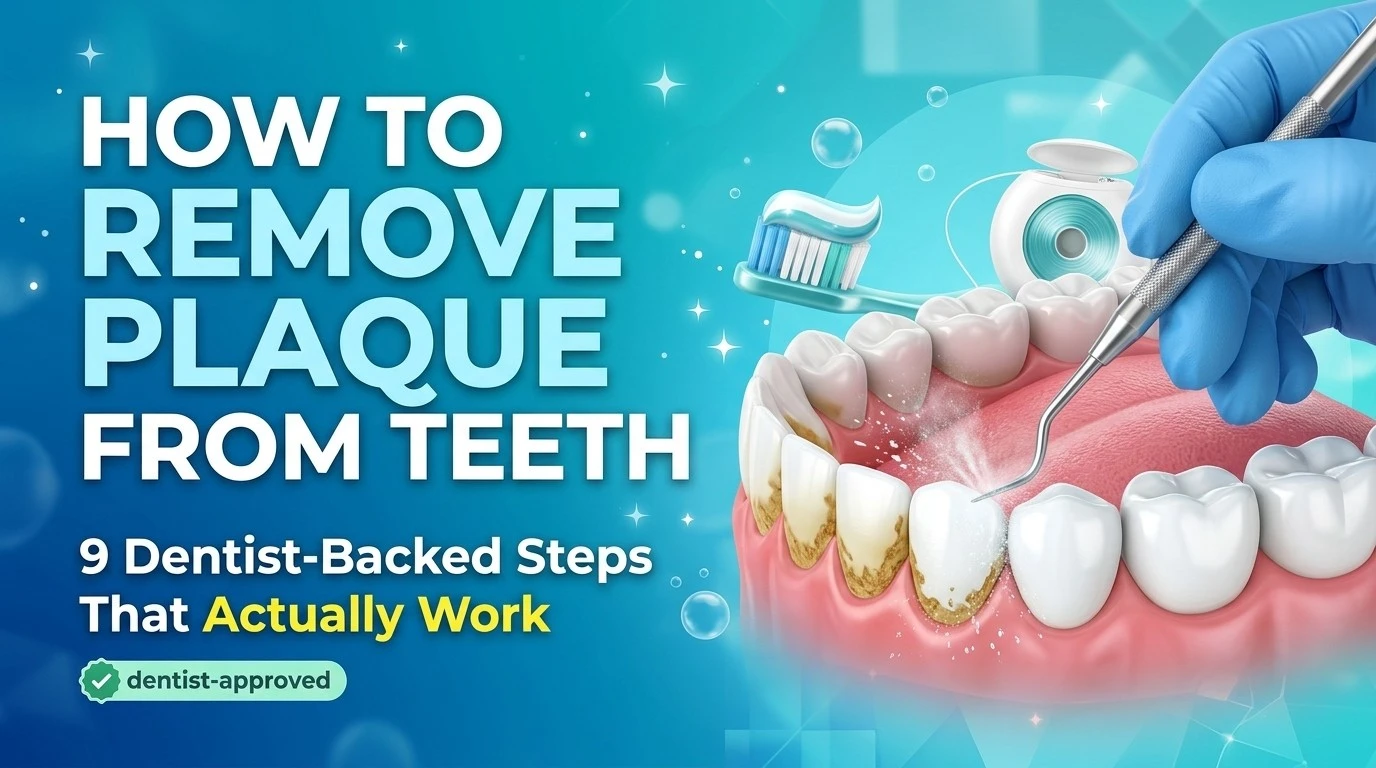

Run your tongue across your teeth right now. Does it feel slightly fuzzy or slick, like a thin coat of something is sitting there? That’s plaque, and every single person who has teeth has it.
The good news is that plaque is easy to deal with when you catch it early. The bad news is that it comes back within hours, and if you leave it alone it hardens into tartar, which no toothbrush on earth can remove. This guide walks you through exactly how to remove plaque from teeth at home, which popular “hacks” to skip, and the point where it’s time to let a dental hygienist take over.
Key Takeaways
- Plaque is a soft, sticky film of bacteria. Brushing and cleaning between your teeth removes it. Tartar is hardened plaque, and only a dental professional can remove it.
- The most effective home routine is simple: brush for two minutes twice a day with fluoride toothpaste, clean between your teeth once a day, and keep up with dental cleanings.
- Baking soda, apple cider vinegar, lemon juice, and DIY scraping tools are either unproven or can damage your enamel and gums.
- Bleeding gums, persistent bad breath, or yellow-brown crust near the gumline are signs it’s time to book a dentist.
What Is Plaque, Exactly?
Dental plaque is a sticky, mostly colorless biofilm made of bacteria, saliva, and leftover food particles. When you eat or drink anything containing sugar or starch, the bacteria in your mouth feed on it and release acids. Those acids weaken your enamel, and the film they live in clings to your teeth, especially along the gumline and in the tight spaces between teeth.
Here’s the part most articles skip: not all of this is a problem. The bacteria in your mouth are part of your natural oral microbiome, and a thin layer of plaque is normal. The goal isn’t to sterilize your mouth. It’s to disrupt the film regularly enough that it never gets thick, acidic, or hard.
Plaque starts rebuilding within hours of brushing, which is why a single heroic cleaning session doesn’t work. Consistency does.
Plaque vs. Tartar: Why the Difference Matters
This is the most important distinction in the whole article, because it decides whether you can fix the problem yourself.
| Plaque | Tartar (calculus) | |
|---|---|---|
| Texture | Soft, sticky, fuzzy | Hard, rough, crusty |
| Color | Clear or pale yellow | Yellow, brown, or even black |
| Where | All tooth surfaces, gumline | Often along the gumline and behind lower front teeth |
| Removal | Brushing and flossing | Dentist or hygienist only |
| Health risk | Cavities, early gum inflammation | Gum disease, bone loss, bad breath |
If plaque sits on your teeth long enough, minerals from your saliva harden it into tartar. Once that happens, the surface is rough, which gives new plaque an even better place to stick. It becomes a cycle that only a professional cleaning can break.
How to Tell If You Have Plaque on Your Teeth
Plaque is hard to see, so look for these clues instead:
- A fuzzy or slimy feeling on your teeth, especially when you wake up
- Bad breath that returns quickly after brushing
- Red, puffy gums that bleed when you brush or floss
- Dull or slightly yellow teeth
- A rough, gritty edge near the gumline (this usually means tartar has started)
A quick home test: Pharmacies sell chewable “disclosing tablets” that stain plaque pink or purple. Chew one after brushing and look in the mirror. Whatever is colored is what you missed. It’s a surprisingly humbling way to fix your technique, and kids tend to love it.
How to Remove Plaque from Teeth at Home: 9 Steps
1. Brush for a full two minutes, twice a day
The American Dental Association recommends brushing twice daily for two minutes with a fluoride toothpaste. Most people stop at around 45 seconds, so use a timer or a brush with a built-in one.
Technique matters as much as time:
- Angle the bristles about 45 degrees toward the gumline.
- Use gentle, short strokes or small circles. Pressing hard doesn’t clean better and can wear down enamel and push gums back.
- Cover every surface: outsides, insides, and chewing surfaces.
- Finish with your tongue, which holds a lot of bacteria.
Spend extra time on the inside surfaces of your lower front teeth. That’s where tartar loves to form, because saliva glands sit right behind them.
2. Choose the right toothbrush
A soft-bristled brush is the safe default. Hard bristles don’t remove more plaque, but they can damage gums.
Electric toothbrushes tend to remove more plaque than manual ones, mostly because they do the technique work for you and many include pressure sensors and timers. If you’re shopping, our guide to the best electric toothbrush breaks down what’s worth paying for. Whichever type you use, replace the brush or brush head every three months, or sooner if the bristles look frayed.
3. Clean between your teeth every day
Your toothbrush can’t reach the sides of your teeth where they touch, and that’s exactly where plaque hides. Pick the tool you’ll actually use:
- Traditional floss: Wrap it in a C-shape around each tooth and slide it just under the gumline. Use a clean section for each gap.
- Interdental brushes: Small brushes that fit between teeth. They’re excellent for larger gaps, braces, bridges, and implants.
- Water flosser: A pulsing jet of water that flushes out debris and plaque. Great for braces and anyone who finds string floss awkward.
- Floss picks: Not quite as thorough, but far better than skipping altogether.
The best option is the one you do every day. Some people find that flossing before brushing loosens debris so that fluoride toothpaste can reach more of the tooth surface.
4. Use fluoride toothpaste (and don’t rinse it away)
Fluoride doesn’t just fight cavities. It helps repair early enamel damage caused by plaque acids. After brushing, spit out the excess toothpaste but skip the big water rinse. Leaving a thin film of fluoride behind gives it more time to work.
If you want extra plaque control, look for toothpastes carrying the ADA Seal of Acceptance. Some formulas also contain ingredients like stannous fluoride, which is known for antibacterial and gum-health benefits.
5. Add an antibacterial mouthwash
Mouthwash doesn’t replace brushing, but it helps reduce the bacteria that build plaque. Look for a product that is alcohol-free if you have dry mouth or sensitive gums, and check for the ADA Seal. Use it after brushing and cleaning between your teeth, and follow the swish time on the label.
6. Eat in a way that starves plaque
Plaque bacteria thrive on frequent sugar and starch. It’s less about how much sugar you eat and more about how often your teeth are exposed to it. Sipping a soda for two hours is worse than drinking it with a meal.
- Keep sugary drinks and sticky snacks to mealtimes.
- Choose cheese, plain yogurt, crunchy vegetables, and fruit over candy or crackers.
- Chew sugar-free gum after meals to boost saliva, which neutralizes acid and washes away food.
- Drink water throughout the day, especially after coffee or anything acidic.
7. Fix the habits that quietly make plaque worse
- Dry mouth: Less saliva means more plaque. Common causes include certain medications, mouth breathing, and dehydration. Tell your dentist if your mouth feels dry all the time.
- Smoking and vaping: Both are linked to heavier plaque and tartar buildup and a higher risk of gum disease.
- Crowded or misaligned teeth: These create hiding spots a regular brush can’t reach. Interdental brushes help a lot here.
8. Time your brushing wisely
Brush right before bed, because saliva flow drops overnight and bacteria multiply. If you’ve just had something acidic (citrus, soda, wine), wait about 30 minutes before brushing, since enamel is temporarily softened and brushing too soon can wear it down. Rinsing with plain water first is a good bridge.
9. Keep your professional cleanings on the calendar
Even people with flawless routines build up some tartar, usually in places the brush can’t get to. Most people do well with a cleaning every six months, but if you tend to build tartar quickly or have gum disease, your dentist may want to see you every three to four months.
What Does NOT Work (and Can Hurt You)
Search online and you’ll find plenty of “natural” plaque and tartar removers. Here’s the honest verdict on the popular ones.
Baking soda. Some baking soda toothpastes have research showing improved plaque removal, and it’s mildly abrasive in a gentle way. But scrubbing with straight baking soda won’t dissolve tartar, and doing it aggressively can scratch enamel.
Apple cider vinegar and lemon juice. Both are acidic. Acid can soften and erode enamel, which makes teeth more sensitive and more cavity-prone. It might make teeth look cleaner for a moment, but the long-term cost isn’t worth it.
Oil pulling (coconut oil). Some small studies suggest it may reduce plaque and gum inflammation a little, but the evidence is limited and it is not a substitute for brushing and flossing. If you enjoy it, treat it as an optional extra.
DIY scrapers and dental picks. Metal scalers sold online look tempting, but it’s easy to gouge enamel or cut your gums, and tartar below the gumline is invisible to you. Infection and recession are real risks. Leave scraping to the pros.
Charcoal toothpaste. It’s abrasive, it hasn’t been shown to remove plaque better than regular toothpaste, and the ADA has not accepted it.
How Dentists Remove Plaque and Tartar
When plaque has hardened, the fix is a professional cleaning, usually called prophylaxis. A hygienist will:
- Scale your teeth with hand instruments or an ultrasonic tool that vibrates tartar loose.
- Polish the surfaces to smooth them so new plaque sticks less easily.
- Floss and check your gum health.
- Apply fluoride if your dentist recommends it.
If tartar has built up below the gumline and your gums are inflamed, you may need a deeper treatment called scaling and root planing. This is done in sections of the mouth, often with numbing, and it smooths the root surfaces so gums can heal and reattach.
What it costs in the US: A standard cleaning typically runs somewhere around $75 to $200 without insurance, while deep cleaning costs more per section of the mouth. Most dental plans cover two preventive cleanings a year, often at little or no out-of-pocket cost, so it’s worth checking your benefits.
What Happens If You Ignore Plaque?
Left in place, plaque can lead to:
- Cavities, from acid sitting against enamel
- Gingivitis, which shows up as red, swollen, bleeding gums and is fully reversible with good care
- Periodontitis, a more serious gum infection that can damage the bone supporting your teeth
- Persistent bad breath, caused by odor-producing bacteria
- Tooth loss, in advanced cases
The encouraging part is that gingivitis usually clears up within a couple of weeks once you start cleaning thoroughly every day. For a deeper look at what plaque does and how it forms, the American Dental Association’s MouthHealthy guide to plaque is a reliable, plain-English resource.
A Simple Daily Routine You Can Actually Stick To
Morning (about 3 minutes)
- Brush for two minutes with fluoride toothpaste
- Clean your tongue
- Spit, don’t rinse
Evening (about 5 minutes)
- Floss or use an interdental brush or water flosser
- Brush for two full minutes
- Optional: antibacterial mouthwash at a different time of day if it’s alcohol-free and you want a second dose of protection
Weekly check-in
- Look at your gumline in the mirror. Pink and firm is good. Red, puffy, or bleeding means step up your cleaning between teeth.
Every 3 months
- Replace your toothbrush or brush head
Every 6 months (or as advised)
- Professional cleaning and exam
When to See a Dentist
Book an appointment sooner rather than later if you notice:
- Gums that bleed regularly or look swollen and red
- Bad breath that doesn’t go away with brushing
- Yellow, brown, or black crusty deposits you can’t brush off
- Gums pulling back from your teeth
- Loose teeth, pain, or a bad taste in your mouth
These can signal tartar buildup or gum disease that needs professional treatment, and the earlier it’s caught, the simpler and cheaper the fix.
Frequently Asked Questions
Can you remove plaque from teeth at home?
Yes, as long as it’s still soft plaque. Thorough brushing with fluoride toothpaste and cleaning between your teeth every day will remove it. Once it has hardened into tartar, you need a dentist or hygienist.
How long does it take for plaque to turn into tartar?
Plaque starts forming within hours of cleaning, and it can begin to harden in a matter of days if it isn’t removed. That’s why skipping floss for a few days can make a noticeable difference at your next cleaning.
What is the fastest way to get rid of plaque?
The fastest safe method is a careful brushing session followed by flossing or a water flosser, then repeating that daily. For built-up deposits, a professional cleaning is the only quick fix.
Does mouthwash remove plaque?
Mouthwash can help reduce the bacteria that cause plaque, but it can’t physically scrub plaque off. Think of it as a helpful add-on, not a replacement.
Can an electric toothbrush remove more plaque?
Research generally finds that electric toothbrushes remove somewhat more plaque than manual ones, especially for people who rush or brush too hard. A manual brush used with excellent technique still works well.
Is plaque removal painful?
Home care shouldn’t hurt. If brushing makes your gums bleed at first, that’s usually inflammation from plaque, and it often improves in one to two weeks of consistent cleaning. Professional cleanings are generally comfortable, though inflamed gums can be tender.
Can you scrape plaque off your teeth yourself?
It’s not recommended. Home scaling tools can damage enamel and gums, and you can’t see tartar below the gumline. Let a professional do it.
Does baking soda remove tartar?
No. Baking soda may help with surface stains and soft plaque, but it can’t dissolve hardened tartar.
The Bottom Line
Removing plaque from your teeth isn’t about a miracle product. It’s about doing a few simple things well, every day: brush properly for two minutes, clean between your teeth, eat with your teeth in mind, and see your dentist regularly. Do that, and plaque never gets the chance to harden into something you can’t remove on your own.
If you’re not sure how you’re doing, start with the disclosing-tablet test tonight. It’ll show you exactly where your routine needs work.
This article is for general education and isn’t a substitute for professional dental advice, diagnosis, or treatment. Always consult your dentist about your specific situation.